
 By
By 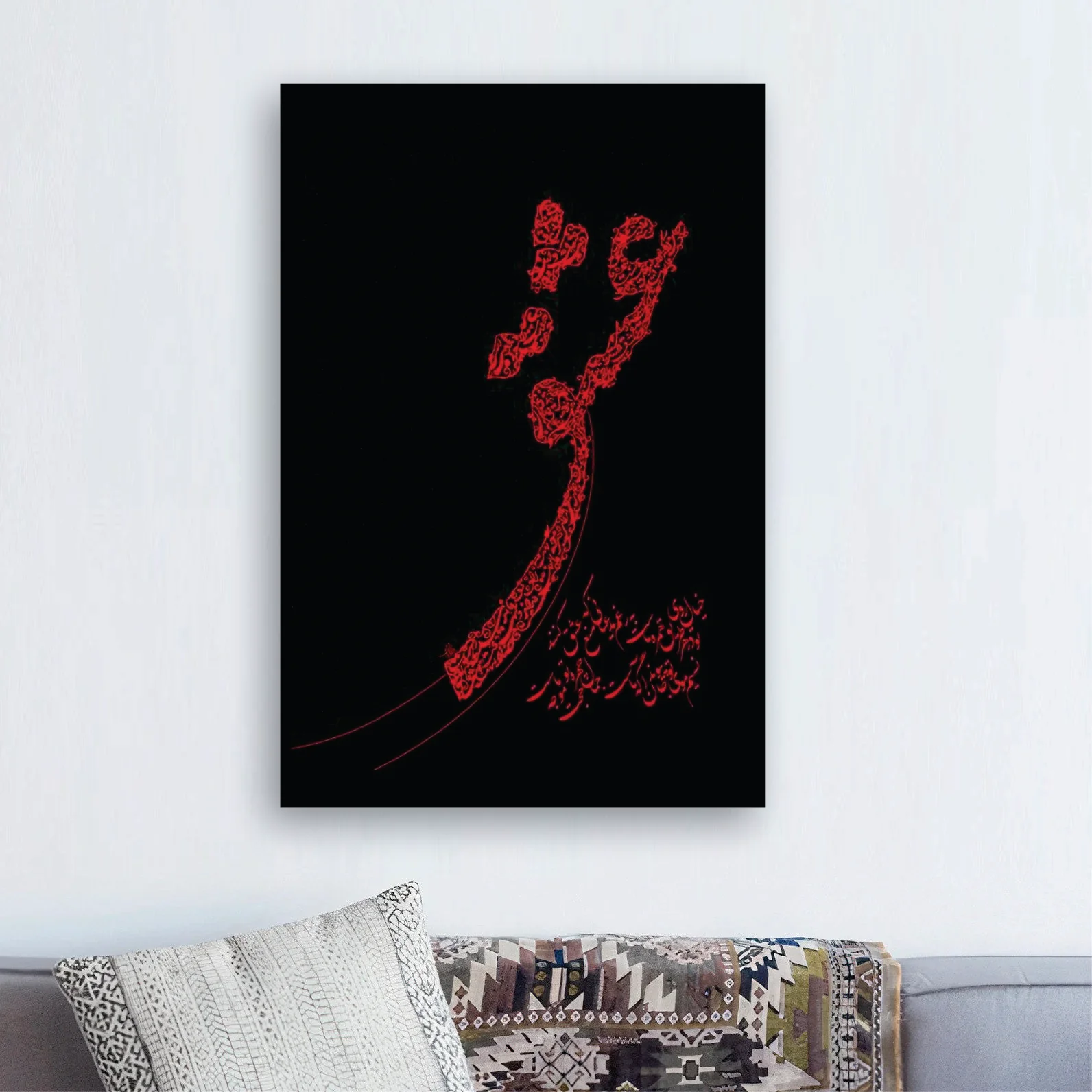
The Timeless Beauty of Persian Style Calligraphy
Persian calligraphy is more than just beautiful handwriting—it is a revered art form that reflects centuries of cultural richness, poetic elegance, and spiritual depth. Originating from Iran and influenced by Islamic calligraphic traditions, Persian calligraphy has captivated the world with its fluid forms and harmonious compositions.
In this blog, we’ll explore the origins, styles, tools, and continued relevance of Persian calligraphy in today’s art and décor.
📜 A Brief History of Persian Calligraphy
The roots of Persian calligraphy trace back to the 7th century following the advent of Islam in Persia (modern-day Iran). As the Persian language adapted the Arabic script, calligraphy evolved as both a religious and artistic expression. Over time, distinct Persian styles developed, and calligraphers began blending visual beauty with poetic depth, often using verses from Hafez, Rumi, and Saadi.
By the 14th century, Persian calligraphy had matured into a refined art, highly respected by courts, scholars, and artists across the Persian Empire and beyond.
✒️ Popular Styles of Persian Calligraphy
Persian calligraphy has several styles, each with its own character and usage. Here are the most celebrated ones:
1. Nastaʿlīq
- Known as: “The Bride of Calligraphy”
- Features: Curved, flowing, and highly decorative.
- Use: Poetry, manuscripts, and fine art.
- Fun Fact: It was perfected by Mir Ali Tabrizi in the 14th century and remains the most iconic style in Persian art.
2. Shikasta Nastaʿlīq (or Shekasteh)
- Meaning: “Broken Nastaʿlīq”
- Features: More cursive, faster to write, with bold stylistic flourishes.
- Use: Administrative documents and artistic compositions in the 17th–19th centuries.
3. Naskh
- Origin: Arabic, but adopted into Persian writing.
- Features: Neat, legible, and commonly used in books and Qur’anic texts.
- Use: Often a foundational style before learning Nastaʿlīq.
🛠️ Tools and Materials of the Calligrapher
Creating Persian calligraphy requires not only skill but also a connection with traditional tools. These include:
- Qalam: Reed pen, hand-cut for different styles and line thickness.
- Davat: Ink pot, usually containing rich black or sepia ink.
- Paper: Often handmade, dyed, or prepared with starch for smooth writing.
- Ink: Traditionally made with soot, gum arabic, and sometimes saffron for fragrance.
Many contemporary artists also use digital tablets to recreate Persian scripts in modern design while maintaining the integrity of traditional strokes.
🖼️ Persian Calligraphy in Art and Home Décor
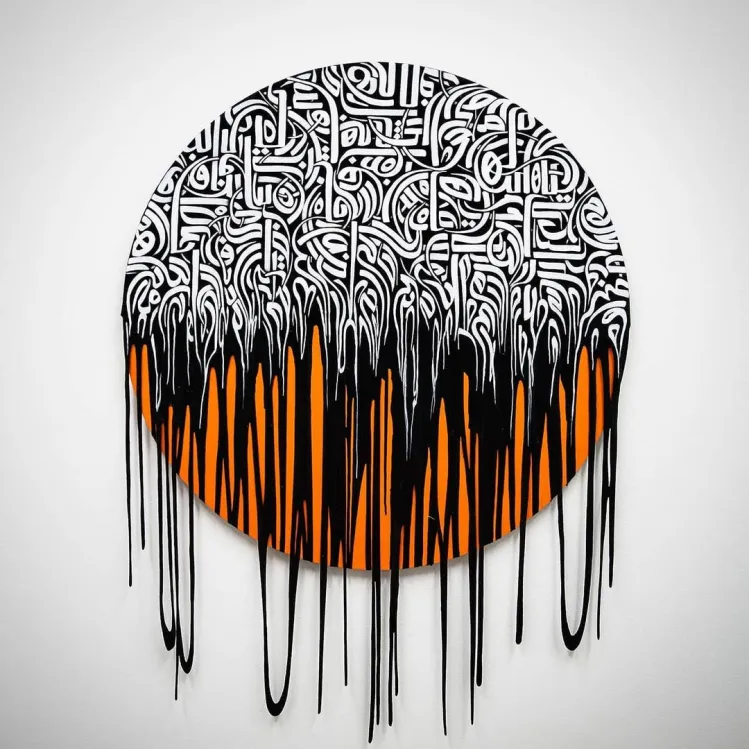
Today, Persian calligraphy isn’t limited to manuscripts or poetry. It’s a growing trend in wall art, ceramics, textile design, and even tattoos.
- Wall Décor: Framed calligraphic quotes or verses add cultural richness and a touch of spirituality to any interior.
- Mixed Media Art: Calligraphers blend classical writing with watercolor, gold leaf, or abstract backgrounds.
- Modern Typography: Graphic designers are experimenting with Persian letters in logos, branding, and digital content.
Whether you prefer a classical black-and-white piece or a colorful calligraphic composition, Persian calligraphy adds elegance and timeless depth to any space.
🌍 Persian Calligraphy Around the World
Thanks to the global interest in Islamic and Persian art, Persian calligraphy has found a home far beyond Iran. Workshops, exhibitions, and online classes are growing in popularity. Calligraphy masters like Mohammad Ehsai and Reza Abbasi have inspired new generations of artists across the Middle East, South Asia, Europe, and North America.
💬 Final Thoughts: A Living Heritage
Persian style calligraphy is not just a preserved art—it is a living tradition that continues to evolve. Its ability to blend poetry, aesthetics, and spirituality makes it both deeply personal and universally admired.
Whether you’re an art lover, a collector, or someone who appreciates the richness of Persian culture, exploring this form of calligraphy is a journey worth taking.
📸 Want to Explore Persian Calligraphy Art?
Browse our curated collection of Persian calligraphy wall décor, where tradition meets contemporary design. Each piece is thoughtfully crafted to bring meaning, elegance, and inspiration to your space.
